The Room With a Job: Auditing Workspace Utilisation Before a Lease Decision
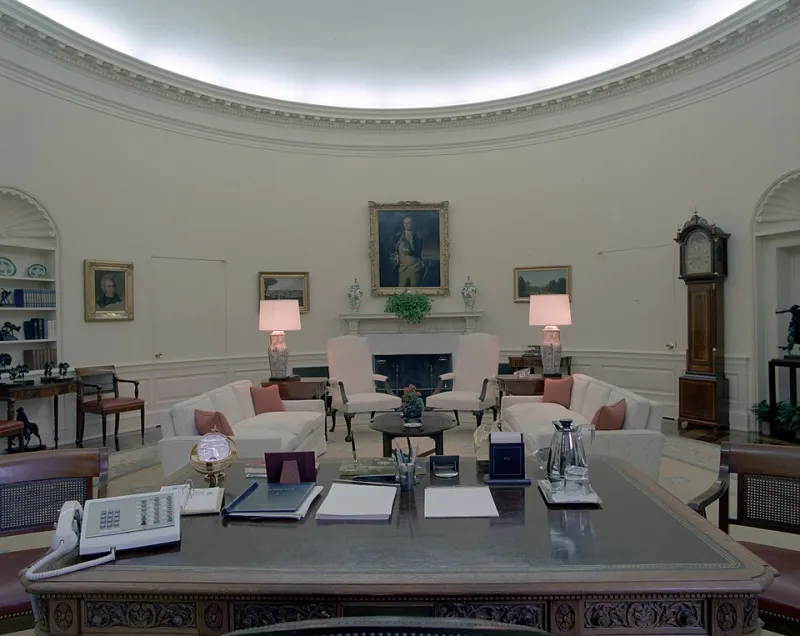
Photo: President (1981-1989 : Reagan). White House Photographic Office. 1981-1989, Public domain, via Wikimedia Commons
Hybrid working is no longer a transition in most UK organisations; it is an operating pattern. Yet the office often remains outside the regular review cycle. Many UK SMEs signed leases in a different labour market and under a different set of assumptions about attendance. As break clauses and renewal dates approach in 2026, those assumptions deserve a fresh test.
The office should be treated as an operational tool with a defined job. That job may be collaboration, client hosting, training, induction or the preservation of organisational culture. It is unlikely to be the provision of a desk for every employee on every day. The practical question is not whether the office is good or bad, but what work it uniquely enables and what space that work actually requires.
Begin with the job, not the floor plan
Before measuring occupancy, agree what the space is for. A useful starting point is to list the work that genuinely benefits from being in the same room: complex problem-solving, onboarding, sensitive conversations, client presentations and the informal exchange that builds trust. Then list the work that can be done elsewhere without material loss: focused individual tasks, routine internal meetings and much of the administrative load.
This distinction matters because utilisation data on its own can mislead. A half-empty floor may still be the right size if it supports a genuinely irreducible pattern of collaboration. A full floor may be the wrong size if the work being done there could be performed remotely at lower cost. The audit should test the purpose of the space, not merely count the people in it.
A four-week measurement that survives scrutiny
A single week can mislead. Attendance is uneven, school holidays distort patterns and a quiet period may reflect seasonal work rather than a settled norm. A four-week window is long enough to capture the normal business cycle while remaining practical for most UK SMEs.
The measurement should be consistent and simple enough to repeat. Desk occupancy can be recorded at two or three fixed points each day, using badge data, booking systems or a short manual count. Room utilisation requires a separate record: bookings against actual use, attendee numbers against room capacity, and no-show rates. The aim is not precision for its own sake but a defensible picture of peak and average demand.
Report the results by day of week and by team where possible. Many organisations find that attendance concentrates between Tuesday and Thursday, with Monday and Friday materially quieter. That pattern has direct implications for the size of the footprint and for the design of the space. It also affects the calculation of service charge and facilities overhead, which are usually fixed regardless of daily attendance.
Separate the work that needs a shared room from the work that does not
Once the data is in, classify the work rather than the people. Some activities need a shared room: workshops, training, induction, client meetings and team-based problem-solving. Others need only a screen and a reliable connection. A third category may need the office occasionally but not a dedicated desk, such as project teams that gather for specific milestones.
This classification produces a minimum viable footprint. If the four-week data shows that peak desk demand is consistently below the number of desks available, the question becomes whether the surplus is providing optionality or simply absorbing cost. If meeting rooms are oversubscribed while desks are empty, the problem may be configuration rather than total floor area. The two findings point to different decisions.
Decision rules for shrink, reconfigure or relocate
Clear rules help a leadership team move from analysis to action. They should be applied with judgement, but they should be written down before the lease conversation begins.
If peak desk occupancy remains below roughly half of available desks across four weeks, and there is no credible growth case for the space, shrinking the footprint deserves serious consideration. If desks are underused but rooms are constrained, reconfiguration is likely to be the better first move: fewer fixed desks, more meeting and project space, and better support for the days when people do attend.
If utilisation is reasonable but the building is costly, poorly located or constrained by lease terms, relocation may be the rational option. In that case the audit becomes evidence for the property decision rather than a substitute for it. The calculation should include rent, service charge, business rates, facilities cost, fit-out amortisation and the operational disruption of a move. It should also include the cost of doing nothing.
Open the lease conversation before the landlord does
Lease events have long lead times. Break notice deadlines, rent review dates and expiry dates are rarely negotiable at short notice. A workspace audit is most valuable when it is completed well before those dates, ideally nine to twelve months ahead of a break or renewal decision.
Armed with four weeks of utilisation data, a tenant can approach the landlord with a clear proposal: a smaller suite, a shorter term, expansion or contraction rights, or a phased handback of space. The data also supports a more realistic discussion about service charge, dilapidations and reinstatement obligations. Waiting until the landlord opens the conversation usually means negotiating from a weaker position and with less time to test alternatives.
Make the audit a routine, not a one-off
The empty desk dividend is not simply the rent saved on unused space. It is the alignment of cost with purpose. An organisation that knows what its office is for can size it, configure it and negotiate for it with confidence.
The audit should become a routine part of the operating cycle, repeated annually or after a significant change in headcount, working pattern or lease position. Assign an owner, report the findings to the leadership team and connect them to the budget. Treated as an operational tool rather than a fixed cost to be endured, the office becomes a decision that can be reviewed, defended and improved.